

.7).png.2606240937357.webp)
Farmers Market Season has officially kicked off in Utah. From Logan to Provo, you can find farmers markets every Saturday morning offering fresh, locally grown produce, artisan-made goods, and a fun way to connect with your community. Why is it important to shop locally? What does it mean when something is in season? Where's your closest farmers market?
Why is it important to shop locally?
When you shop locally, you're supporting local farmers, artisans, and growers here in Utah. Your dollar goes further, and you know exactly where your food is grown. You can build relationships with the people who put food on Utahns' tables.
There are also unique benefits to shopping at farmers markets. For example, some markets in Utah offer the Double Up SNAP benefit program, which allows EBT recipients to spend their EBT dollars at the market on Saturdays, and the market will match up to $20 to spend directly with farmers and growers on fresh meat, eggs, bread, fruits, and vegetables. For a full list of markets with the Double Up SNAP Program, click here. Farmers markets are also a great place for restaurants, bakeries, and coffee shops to get into the community early on and grow alongside it.
What does it mean when something is “in season”?
A fruit or vegetable is “in season” when it's at its natural peak harvest. Seasonality varies state by state, so it's worth checking what grows in your state, when it grows, and when it hits its peak.
Northern Utah's communities were actually founded around agriculture. North Ogden Cherry Days, Brigham City Peach Days, Hooper Tomato Days, Green River Watermelon Days, Bear Lake Raspberry Days, and Pleasant Grove Strawberry Days all celebrate the harvest of these fruits at their peak season, when they taste the best and have the highest vitamin and mineral content. That's exactly why a tomato from a farmers' market in August tastes so different from a tomato from the grocery store in February.
What's in season in June? Fiber-packed greens.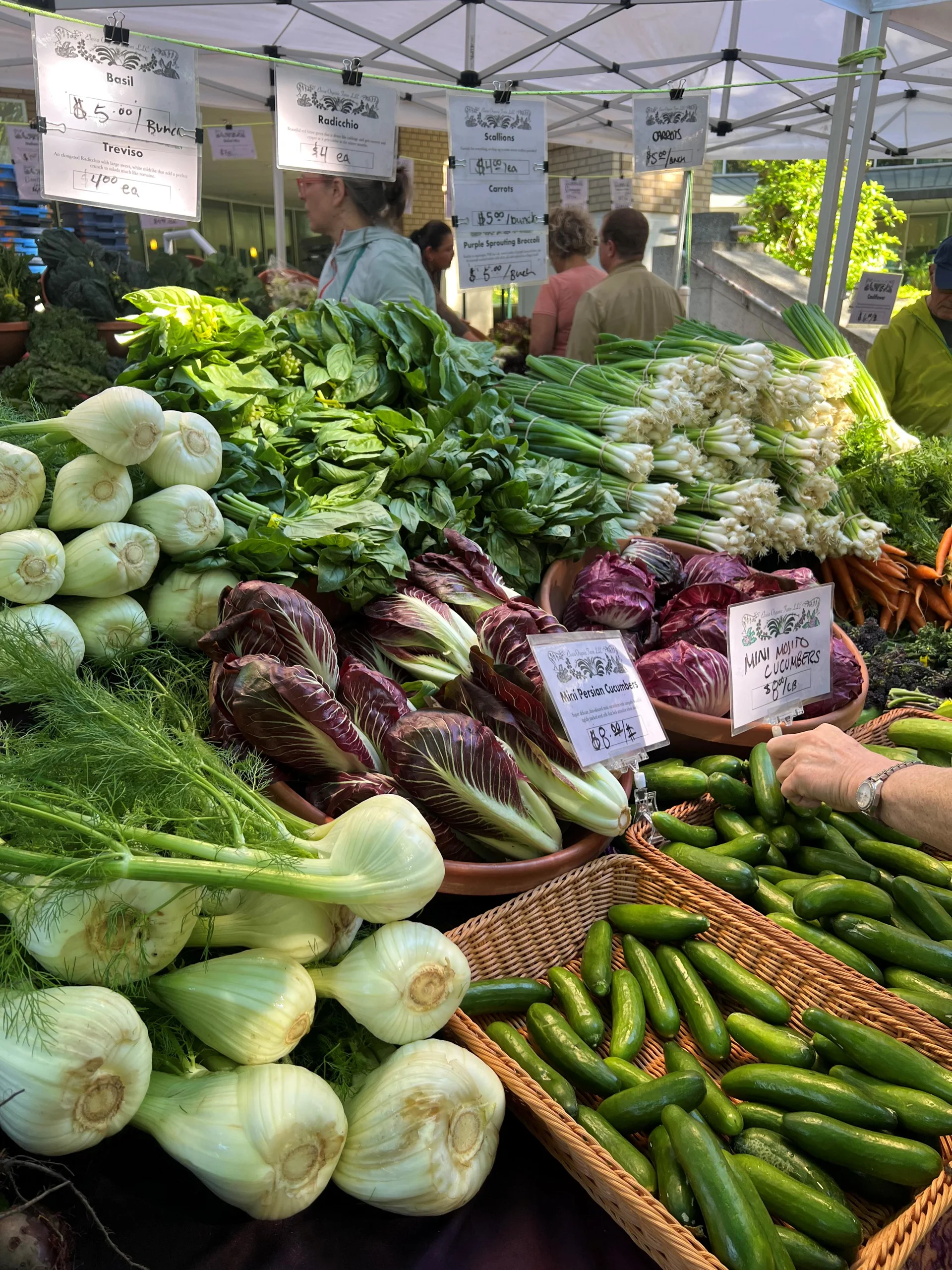
Late May and June mark the beginning of fruit and vegetable season in Utah. At the very first markets of the year, expect to see sugar snap peas, kale, asparagus, radishes, Swiss chard, spinach, lettuce, rhubarb, strawberries, beets, broccoli, basil, cilantro, dill, and mint. June is all about leafy greens, root veggies, a little sweetness, and fiber.
Fiber does a lot of quiet, important work. It keeps digestion moving, helps regulate blood sugar, and supports a healthy gut microbiome. Diets high in fiber are linked to lower rates of heart disease and type 2 diabetes, and fiber-rich foods help you feel fuller for longer, since they stay in your stomach longer than low-fiber foods.
June's harvest is built for this: leafy greens like kale, spinach, Swiss chard, and lettuce are loaded with fiber alongside vitamins A, C, and K and minerals like potassium and magnesium. Root vegetables like radishes and beets add their own fiber boost, while rhubarb and strawberries bring a little natural sweetness to balance it out. Eating a variety of greens throughout the week has even been associated with slower cognitive decline in older adults, making this month's market haul good for more than just your gut.
What's in season in July? Antioxidant-rich berries. 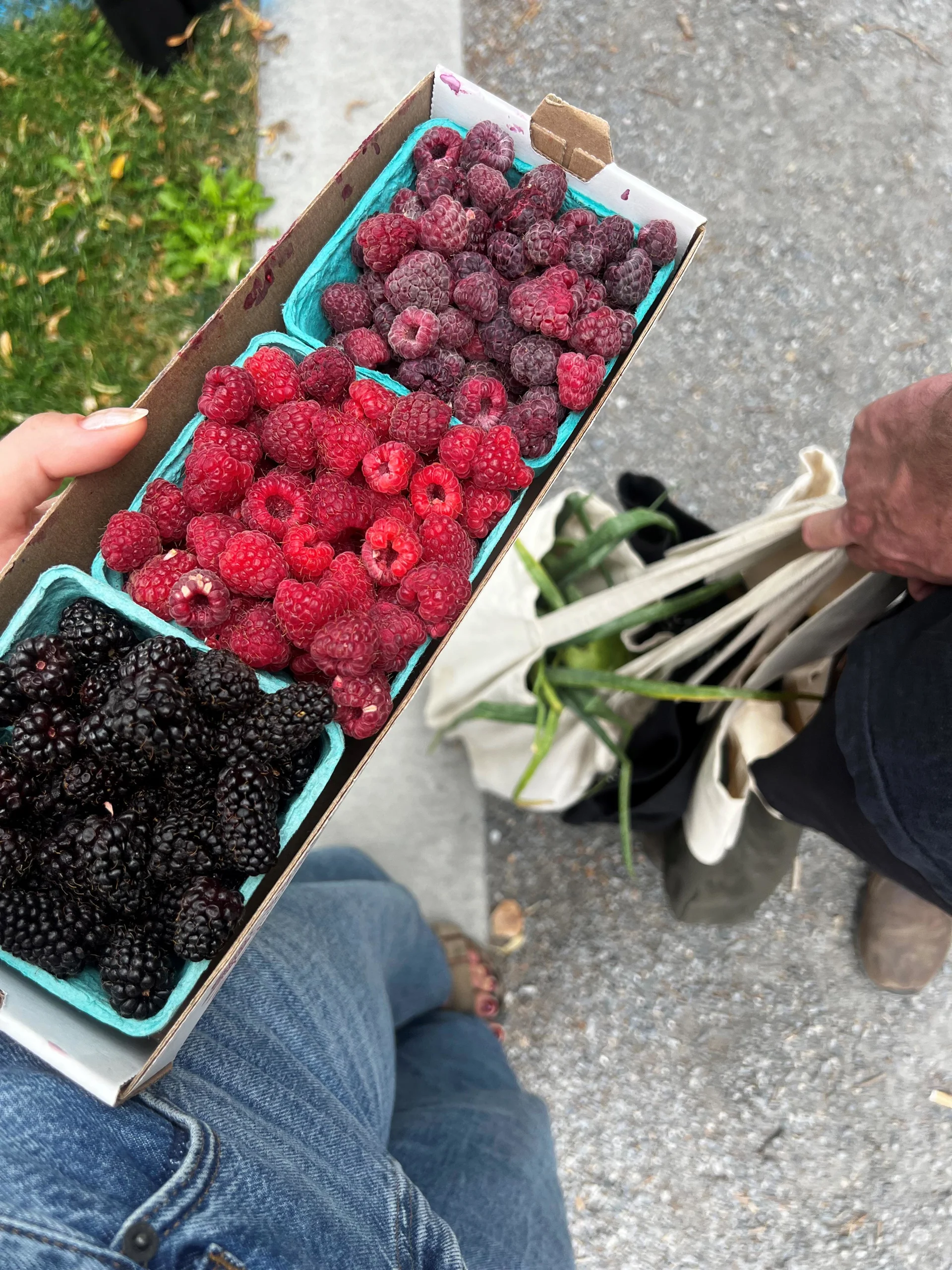
Berries! Blueberries, blackberries, currants, and raspberries (seriously, so many varieties you won't find at the grocery store), plus cherries, apricots, grapes, garlic, garlic scapes, eggplant, and cabbage. All of these colors and berries are an incredible source of antioxidants in your diet.
Antioxidants help your body manage oxidative stress, the everyday wear and tear caused by free radicals, which, left unchecked over time, is linked to heart disease, certain cancers, and other chronic conditions. The deep purples, reds, and blues of berries aren't just pretty; the same pigments (anthocyanins, in particular) are doing the antioxidant work.
July's berries are some of the most antioxidant-dense foods around, and cherries, grapes, and garlic round things out with their own antioxidant compounds. Research has linked regular berry consumption to better blood vessel function, healthier cholesterol levels, and reduced inflammation. Garlic scapes and eggplant add even more variety to the antioxidant mix this month. Since fresh berries are considered the most potent form, a Saturday morning at the market, rather than the freezer aisle, is one of the best ways to get them.
What's in season in August? Hydration you can eat. 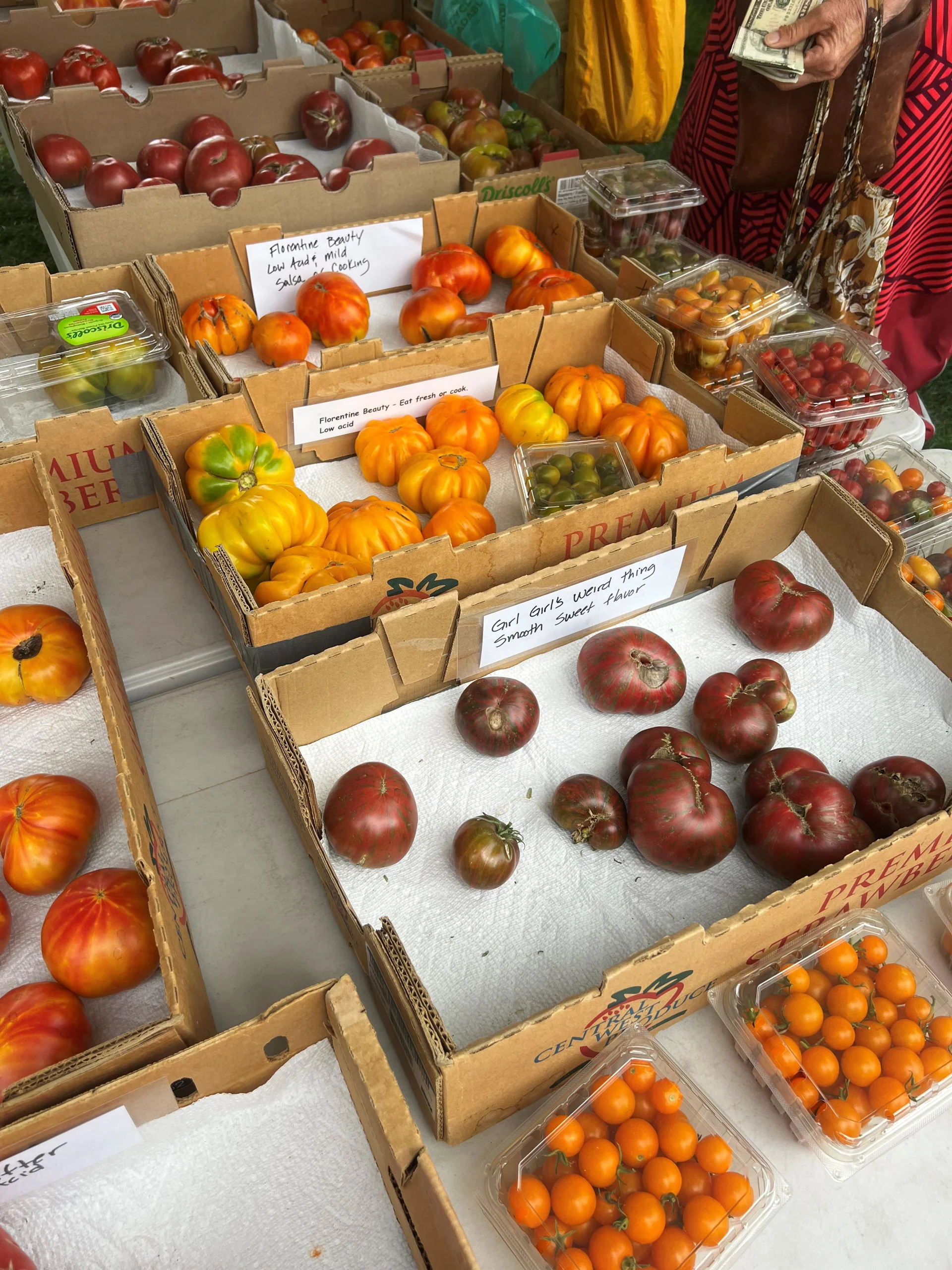
Peaches, plums, nectarines, sweet corn, watermelon (Green River black diamond watermelons!), cantaloupe, honeydew, cucumbers, tomatoes, and peppers. It's the best time of year to eat your hydration.
By August, Utah heat is in full swing, and the harvest follows suit. Watermelon, cantaloupe, honeydew, peaches, and cucumbers are all over 90% water by weight, making them an easy, delicious way to support hydration without just reaching for the water bottle. They also carry electrolytes like potassium, which help your body actually retain and use the water you're drinking.
Tomatoes and peppers, also peaking in August, bring vitamin C and additional water content along with their flavor. If you're on a watermelon kick, Green River's famous black diamond watermelons are a Utah point of pride worth seeking out. Eating your water this way, alongside drinking it, is one of the easiest seasonal habits to pick up.
What is the closest Farmers Market to me this summer?
- Farmers Market Ogden: Saturdays from 8:00 am to 1:00 pm
- Ogden Valley Open Market: Thursdays from 5:30 to dusk
- Bountiful Farmers Market: Thursdays from 4:00 pm to 8:00 pm
- Cache Valley Gardeners Market: Saturdays from 9:00 am to 1:00 pm
For other local markets in Northern Utah, check out Utah's Own Market List here.