

It’s Saturday morning and you’re out pulling weeds before it gets too hot. One unfortunate twist while pulling causes sharp and sudden pain in your back. You take a break but, upon standing, can barely bend over again to finish the job.
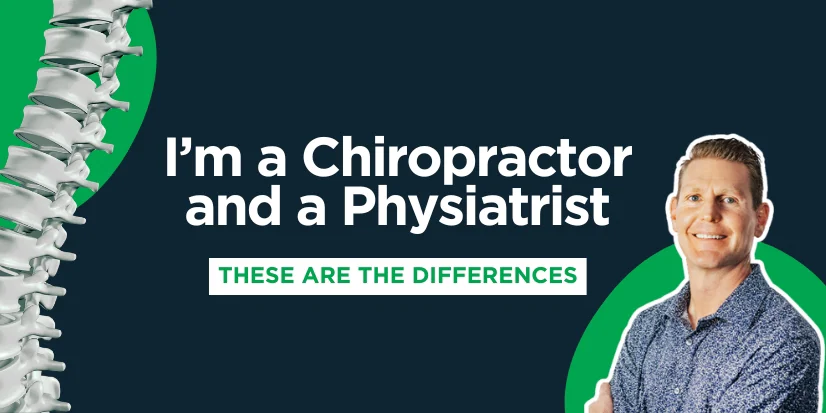
These types of injuries can take you out of everyday life quickly. Who do you see for something like this? Steve Mayer, NP-C, D.C., brings a unique perspective to back and spine care. He’s both a licensed chiropractor and a nurse practitioner specializing in PM&R (physical medicine & rehabilitation).
How do PM&R and chiropractors differ? Who should you see when back pain affects your life? And can the two fields work together?
Chiropractor & PM&R Use Different Tools with a Shared Goal
While chiropractic care and PM&R both focus on relieving pain and improving movement, they don't approach treatment in exactly the same way.
"PM&R focuses on conservative treatment," Mayer explains. "That may include physical therapy, injections, medications, and other non-surgical options. The end goal is to avoid surgery if possible—but if surgery is needed, we make sure patients get there quickly.” Steve’s clinic has their own neurosurgery wing for severe cases.
Chiropractic care often centers on spinal alignment and manual adjustments, while PM&R has a broader toolbox. Depending on the patient's needs, a treatment plan might include physical therapy, chiropractic care, massage therapy, acupuncture, medications, or image-guided injections.
Rather than following a one-size-fits-all approach, Mayer says every patient receives an individualized plan.
"Everybody's a puzzle," he says. "We're trying to tailor a treatment plan that's specific for each person rather than giving everyone the same treatment."
Can PM&R and Chiropractic work together?
One common misconception is that patients need to choose between chiropractic care and medical treatment. In reality, the two can complement one another.
For example, someone recovering from a car accident may benefit from physical therapy to strengthen muscles while also receiving chiropractic adjustments to improve mobility. Mayer frequently coordinates both therapies when appropriate.
"I've referred people to a chiropractor and a physical therapist at the same time," he says. "We want to strengthen while we work on alignment. Those can be helpful together."
His chiropractic background also helps him understand what patients have already tried and where those treatments fit into the bigger picture.
"It's given me a more complete view of spine care and the different treatment options that are available," he says.
Radiating or Referred Pain in the Limbs
One of PM&R's biggest strengths is determining where pain is truly coming from.
- A herniated disc can cause arm or leg pain, numbness, or tingling.
- Hip problems can mimic low back pain.
- Knee pain can alter the way you walk, eventually contributing to back pain.
- Muscle imbalances can place extra stress on the spine over time.
Through a detailed evaluation, PM&R specialists identify the true source of pain before recommending treatment.
"The number one goal is to get people out of pain now," Mayer says. "But what can we do in the long run so we don't keep repeating the same problem?" That emphasis on prevention is something he carried over from his years in chiropractic practice.
You May Not Need Surgery
Many patients are surprised to learn that surgery is rarely the first recommendation for spine pain.
Physical therapy is often the foundation of treatment, and many patients improve with a combination of exercise, education, and other conservative therapies. When additional care is needed, PM&R specialists can coordinate injections or refer patients to orthopedic or spine surgeons (but only when those options are truly appropriate).
"Our goal is to help people recover using the least invasive treatment that will work," Mayer says. "Every person is different, so every treatment plan should be different, too."
No Need to Jump Around Scheduling—We Take New Patients
 You don’t need a referral from your primary care doctor to see the PM&R team at Ogden Clinic. Steve and his colleagues see adults of all ages for acute (sudden) injuries and nagging or degenerative back pain that doesn’t seem to be improving.